






Staffing Your Camp
Everything in this section is related to staffing your camp and getting counselors up to speed. The first step is to define what your minimum qualifications are for counselors you will hire.
You want counselors to have a range of expertise and dispositions so that they are able to support students with a wider range of experiences and needs. Strong counselors are often:

Since you are working with young children, counselors should be comfortable with the unexpected. Often, these traits are more important than technical expertise since that can be taught.
Counselor Requirements and Qualifications
Check your state’s requirements for who can work with children. Many programs require counselors to be at least sixteen years old. Most states also require background checks, which can be costly, so include those in the program’s budget. Also find out if all or just a percentage of staff must be CPR and first aid certified.
We like to have one lead counselor who is a classroom teacher or has had extensive experience teaching. We try to stick to a ratio of one counselor per six to eight students. We also find it useful to have a floating counselor in the room to help when there are technical issues.
Planning for Supervision and Support
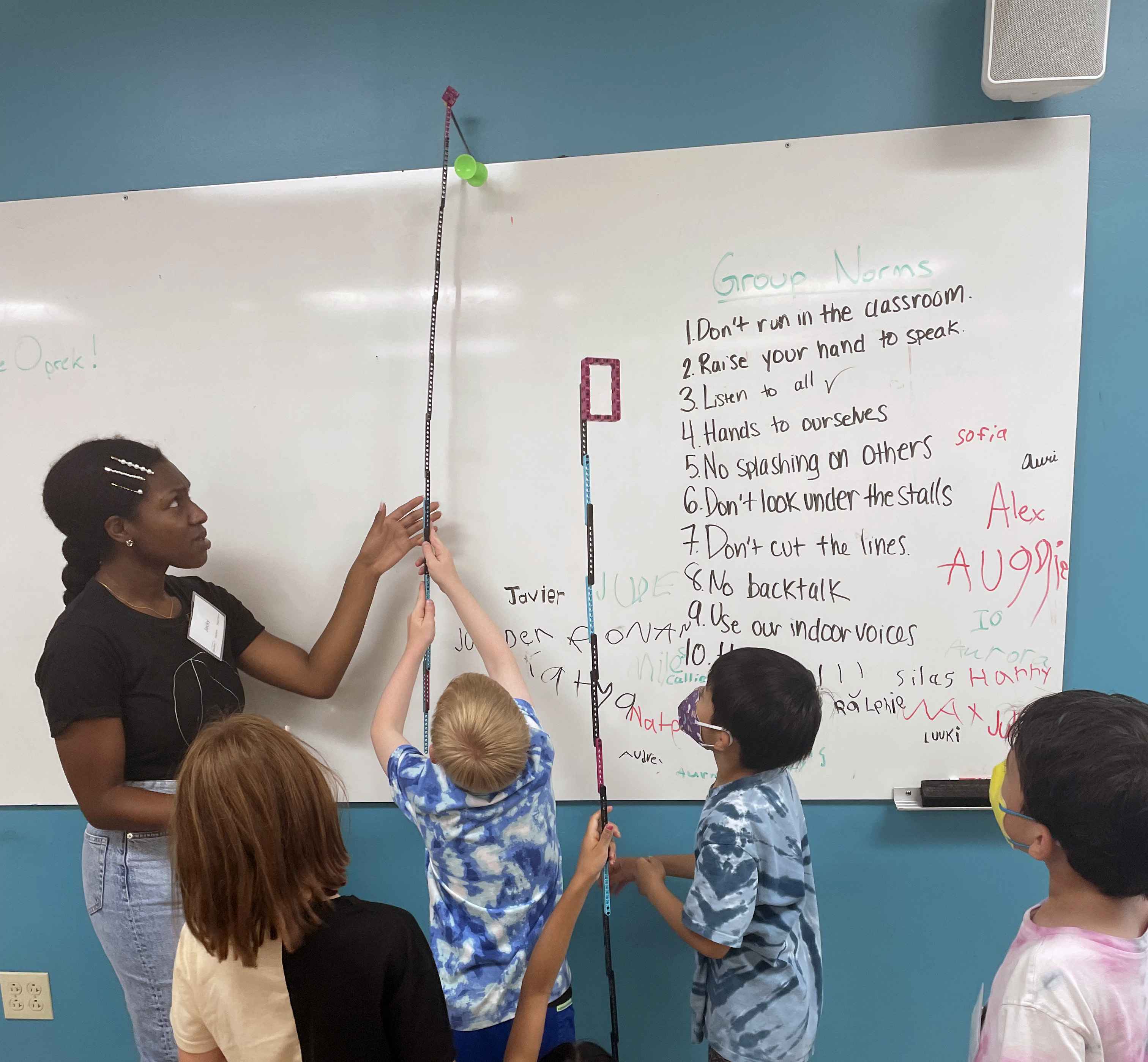
As you think about the number of counselors you will need, think about how you can support the campers if there is a technical issue so that one counselor getting involved in that does not impact the experience for the rest of the campers.
Also think about supervision policies such as the two-adult rule, which means that one adult should not be alone with a camper. These transitions may occur when a child needs to use the restroom.
When considering how many counselors you need, consider if you will include junior counselors. Junior counselors can be helpful, but often need support.
Ideal Counselor Candidate
An ideal candidate would demonstrate the above qualities and also have subject matter knowledge. They should also have relevant experience working with youth, either through volunteer work or a job.
Jobs such as teaching and mentoring are good ways to learn about balancing goals, probably academic ones if a tutor, with individual students’ needs. Having at least a few counselors with knowledge of the robotics kits you will be using is the easiest way to make sure the campers will be supported as they learn.
Recruitment Strategies
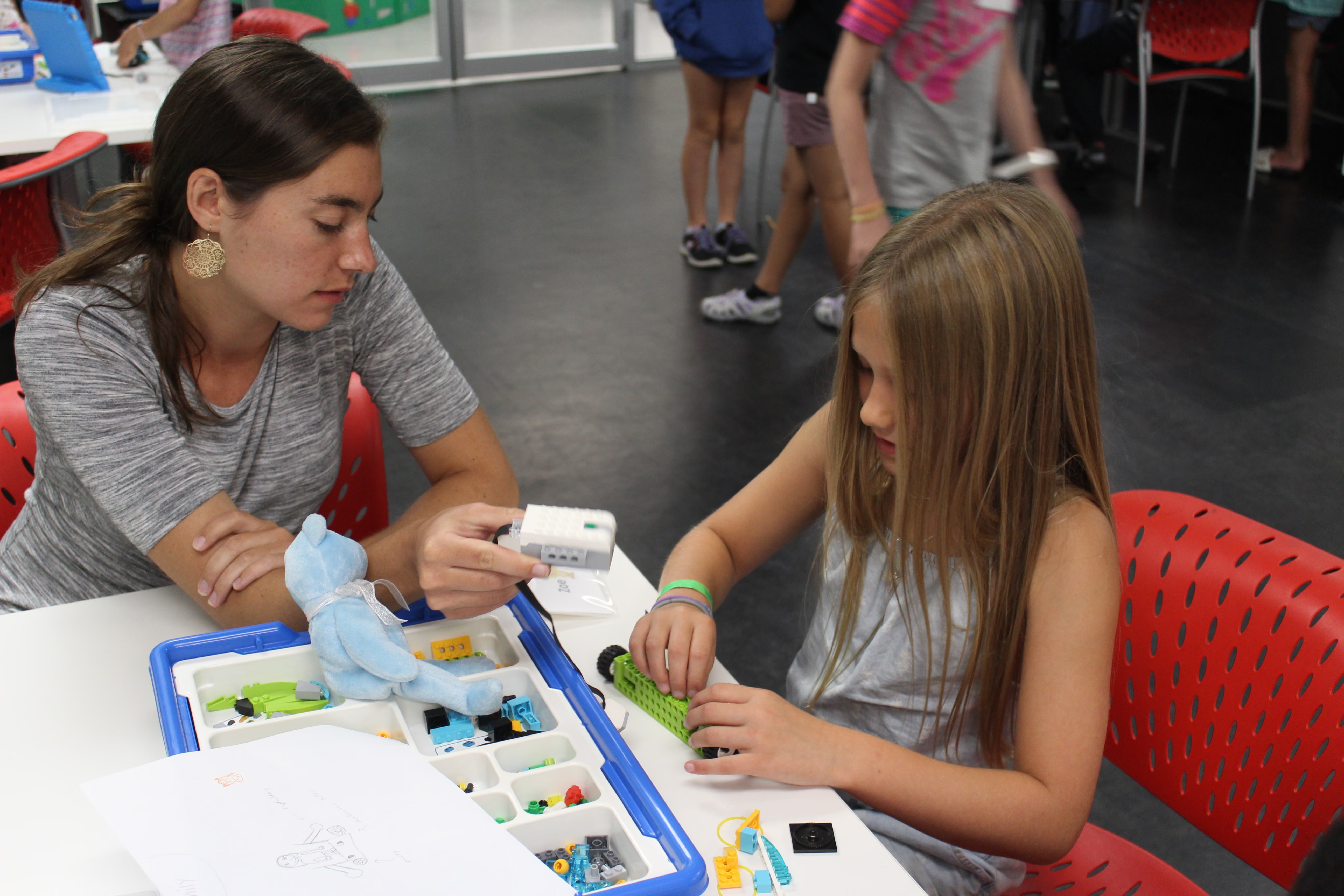
- Send emails to local schools if you want to hire a teacher as a lead counselor
- Advertise at local universities and colleges with programs in STEM and/or education
- Recruit responsible high school and college students when supervision is available
- Develop a leadership or counselor-in-training program for high school students
Leadership Development Opportunities
- High school students with an interest in LEGO robotics can volunteer and build leadership skills
- Leadership programs can create a pipeline for future counselors
Interviewing Counselors
Although interviewing virtually is more convenient, interviewing people in person allows you to see how they interact with the materials and children if your program is part of an ongoing one. Interview questions can be a mix of probing for content knowledge, their philosophy on working with children, and how they function as part of a team. Questions can include:
If time allows, you can evaluate what they look like in action in a number of different ways:
- Have candidates participate in a trial session or build something with robotics kit
- Observe interactions with a small group of children and then discuss it
- Evaluate communication, flexibility, and classroom presence
Hiring Counselors
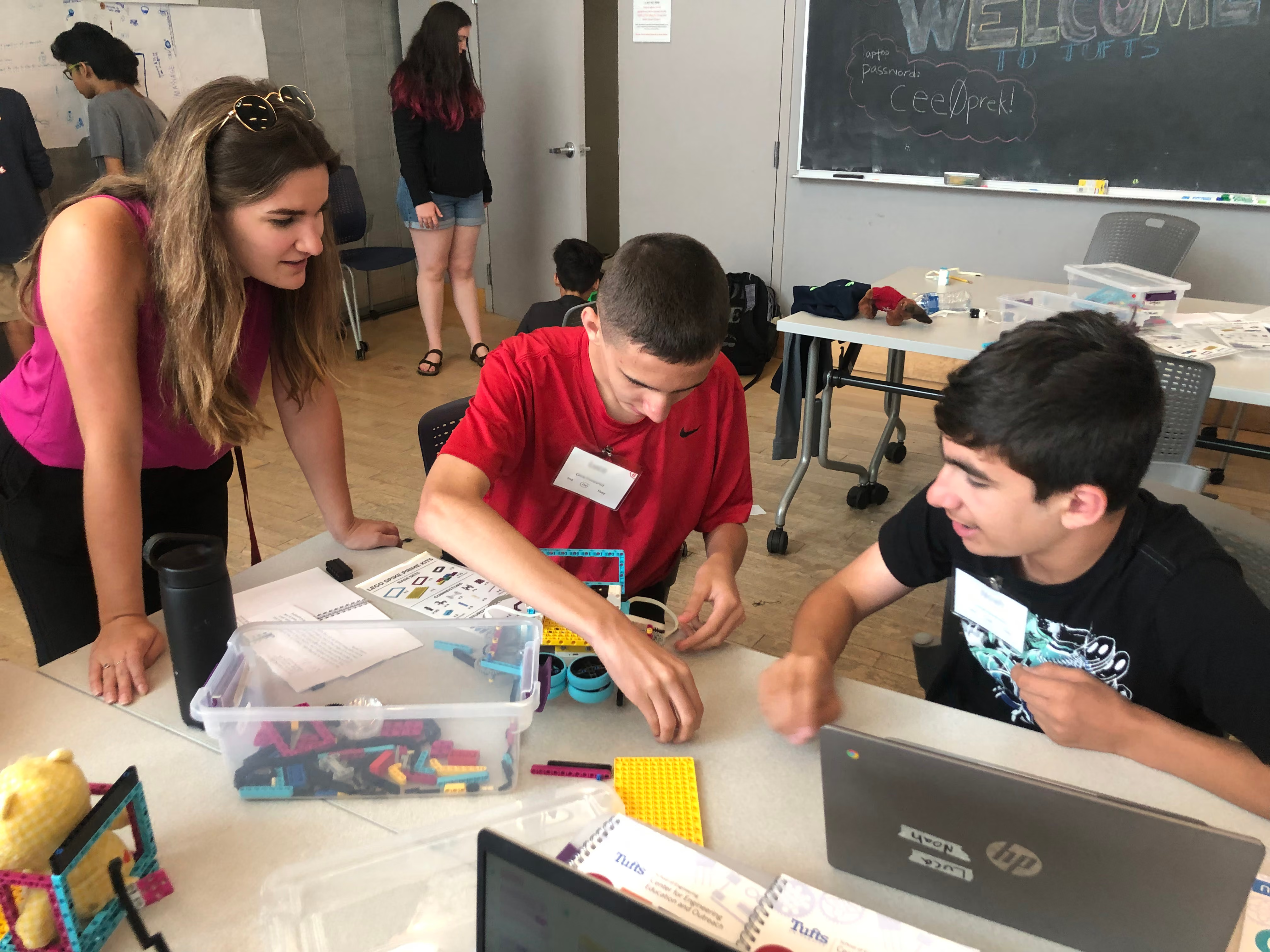
- Submit all required background checks
- Seek candidates with STEM backgrounds when possible. Especially teachers or students in science, technology, engineering, and mathematics
- Hire of different genders so campers have varied role models
- Consider diversity in experience, age, and backgrounds
Training Counselors
The length and depth of training will depend on:
- Available funding
- Counselor availability
- Program complexity
- Mandatory reporter training requirement
- Review state and local requirements
- Often legally required for adults working with minors
- Training is one of the highest-leverage investments a program can make.
Training is one of the highest-leverage investments a program can make.
Counselors should familiarize themselves with the robotics kits and activities. Training should be completed before the counselors work with the children. It is useful for them to put themselves in the place of the campers and run through all the activities from start to finish. This way they will have the experience to help campers troubleshoot. It will also help them anticipate which parts of activities may cause campers to have problems and what possible solutions may be. During training counselors can work in groups so they can get to know each other and have

Core Training Topics
In addition to the technical aspects of the camp, training should cover logistical information and the camp’s philosophy for working with children. Below is an outline of topics to cover during training. Throughout the training make room to discuss what the topic is and for counselors to ask questions and voice concerns. A staff handbook that covers your training topics is a useful tool for counselors to have as the summer progresses.
.svg)